
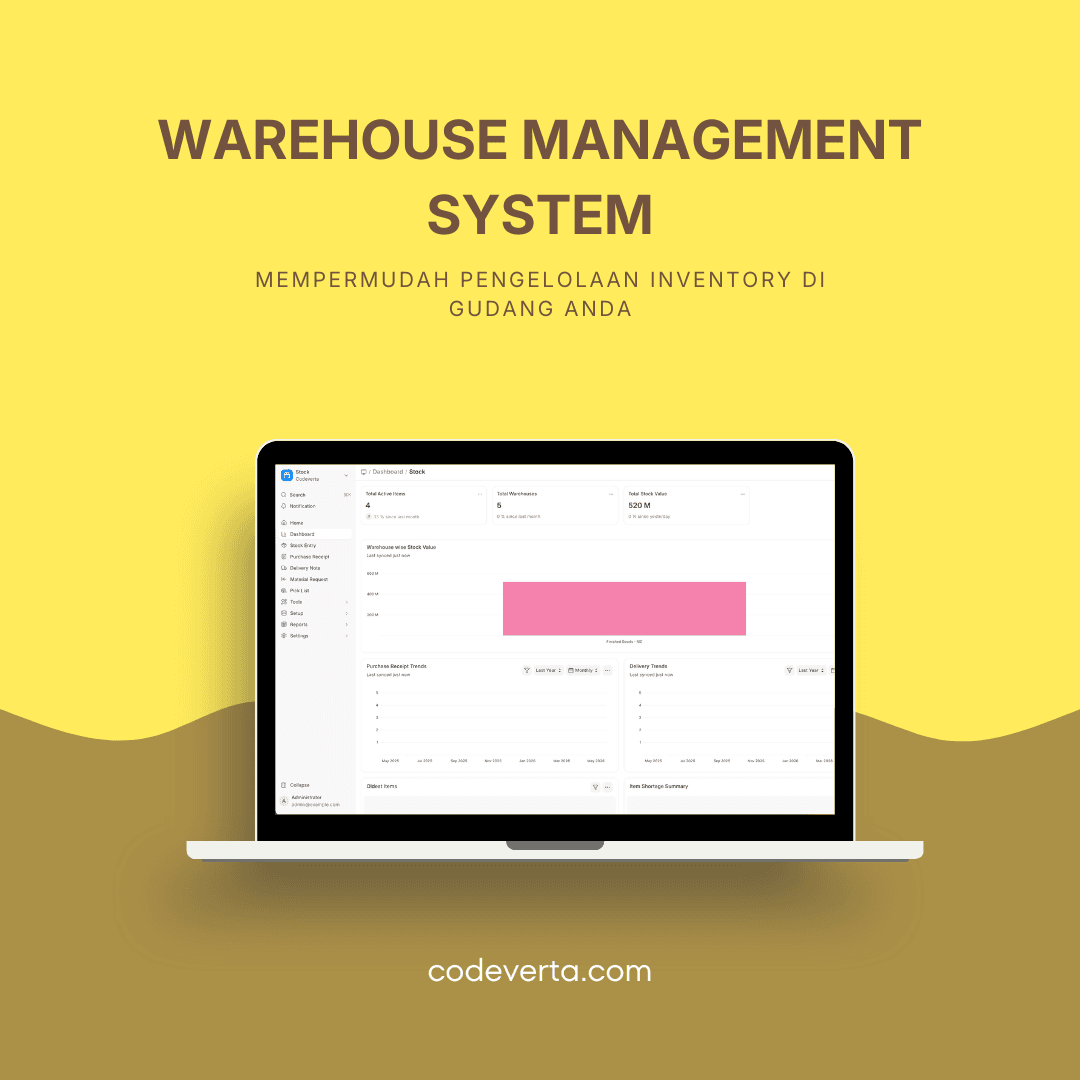
Learn the warehouse problems often faced by Indonesian SMEs and how a web-based warehouse management system helps control stock, reduce losses, and speed up daily operations.
Recommended Products

Why SME Warehouses Get Messy and How a Web-Based WMS Can Help
Imagine running a busy laundry business. Yesterday you bought 50 gallons of detergent, but today an employee says half of it is already gone. You rush to the storage room and find old supplies hidden behind new stock. Orders are piling up, customers are waiting, and complaints start coming in.
This is not rare. Many small and medium businesses in Indonesia still manage warehouses with notebooks, Excel sheets, or employee memory. The result is predictable: stock differences, missing items, wasted time, and lost opportunities.
After helping businesses in laundry, catering, coffee shops, gyms, equipment rental, contractors, and small hotels build operational systems, one lesson is clear: warehouse problems are usually not caused by lazy staff. They are caused by a lack of visibility.
Common Warehouse Problems for SMEs
Most SME warehouses are not large modern facilities. They are back rooms, rented storage spaces, or home garages. But as the business grows, the operational complexity grows too.
Common pain points include:
- Inaccurate stock. Incoming and outgoing items are recorded manually. At stock opname, the numbers rarely match.
- Slow item search. Staff can spend 10-15 minutes looking for one item because storage locations are unclear.
- Overstock or stockout. Businesses buy too much because they are afraid of running out, or they run out during busy periods.
- Damaged or expired goods. Catering and coffee shop ingredients can expire if incoming dates and FIFO rotation are not tracked.
- Wrong picking and packing. Wrong items are packed or shipped, causing returns and customer complaints.
- Hard-to-create reports. Owners cannot easily see best-moving items, dead stock, or current inventory value.
If ignored, these problems directly affect cash flow and customer trust.
What Is a Warehouse Management System?
A Warehouse Management System (WMS) is software that helps manage warehouse processes digitally and in real time.
For SMEs, a web-based WMS is practical because:
- It can be accessed from a phone or laptop
- It does not require complex installation
- It can start small and scale later
- It can connect with sales or accounting systems
A good WMS does more than record stock. It improves the workflow from receiving to reporting.
Practical WMS Workflow for SMEs
1. Map Locations and Items
Start by labeling every storage location: Rack A1, Shelf B2, Cold Storage C, and so on. Enter these locations into the system so staff know where items should be placed.
2. Record Incoming Goods
When goods arrive from suppliers, staff can scan a barcode or input data from a mobile device. Stock updates automatically.
3. Manage Stock in Real Time
Set minimum stock alerts, expiry alerts, and FIFO rotation rules. For coffee shops, the system can warn when coffee beans or milk are close to expiry.
4. Improve Picking and Packing
When an order comes in, the system provides a picking list. Staff can confirm items before packing, reducing errors.
5. Track Returns
Returned goods can be recorded with clear reasons, so owners can identify repeated problems.
6. Analyze Inventory
Dashboards can show stock turnover, inventory value, and slow-moving items.
Example: A Laundry Business in Yogyakarta
Before using a WMS, a laundry owner had difficulty tracking detergent, fragrance, and plastic bags. Staff often claimed stock was gone, but no one knew exactly when or where it was used.
After implementing a simple web-based system:
- Stock could be monitored from a phone
- Low-stock alerts reduced emergency purchases
- Picking time became faster
- Stock differences dropped significantly
- Monthly reports showed which supplies were used the most
The biggest improvement was not just stock accuracy. The owner gained peace of mind.
Conclusion
Warehouse chaos is expensive. It wastes time, money, and customer trust. A web-based warehouse management system helps SMEs control stock, reduce mistakes, and make better decisions.
For Indonesian SMEs that want to grow, warehouse visibility is not optional. It is the foundation of efficient operations.
🚀 Butuh Sistem Serupa?
Kami dari Codeverta bisa bantu bangunkan sistem Warehouse Management System yang sesuai dengan kebutuhan bisnis Anda.
Tim teknis kami siap mendiskusikan kebutuhan Anda tanpa biaya.
More Articles
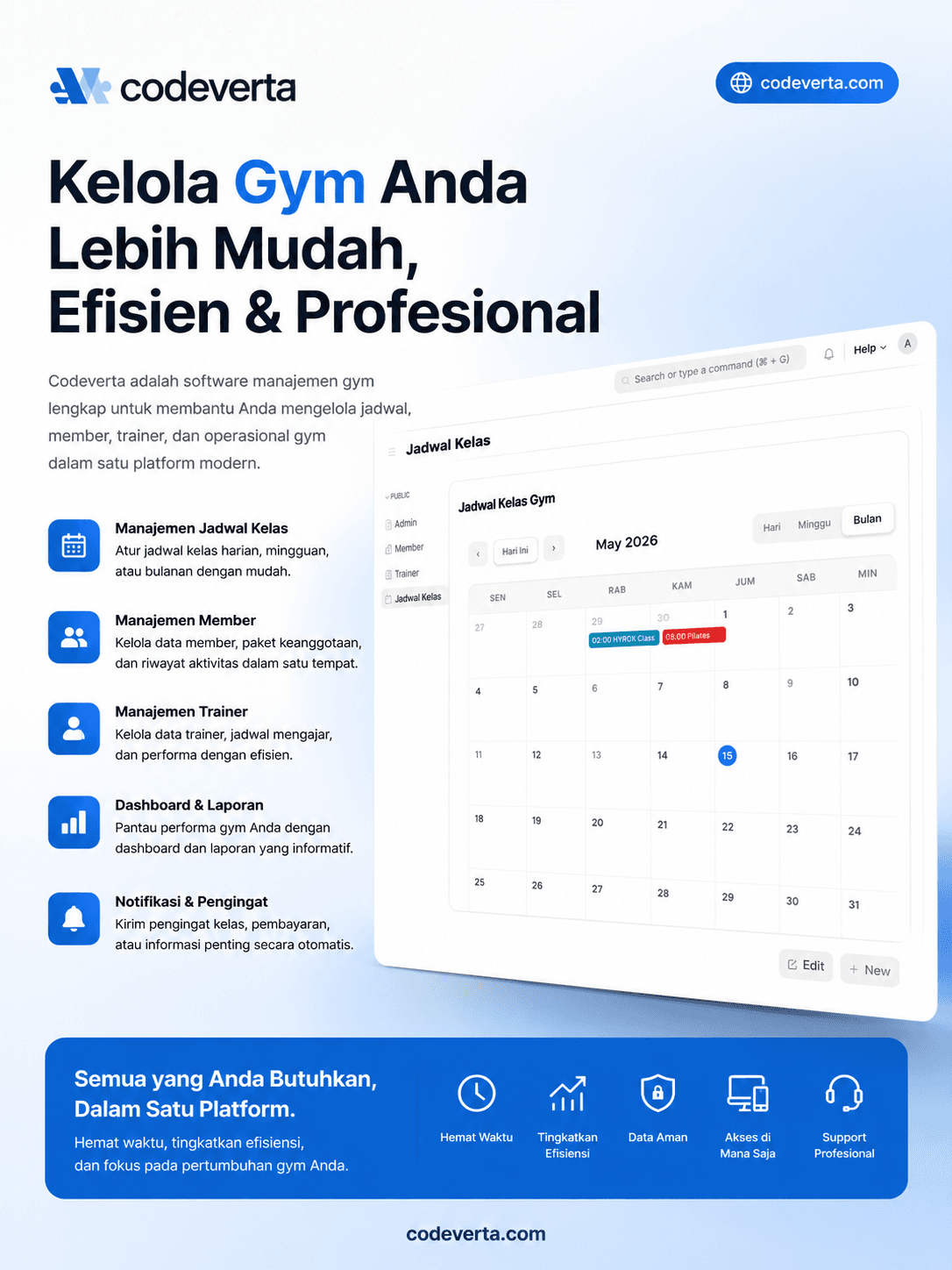
Votre salle de sport est en désordre parce que vous utilisez encore des registres manuels ? Il est temps d'utiliser un système de gestion
15 juillet 2026
retención gimnasio pour les entreprises modernes
10 juillet 2026
retención hotel pour les entreprises modernes
5 juillet 2026
materiales construcción pour les entreprises modernes
25 juin 2026