
Large catering orders can become chaotic when menus, ingredients, delivery schedules, and payments are managed manually. Learn how a digital system helps.
Recommended Products
How to Manage Large Catering Orders Without Losing Control
Catering businesses can grow quickly, especially when they serve offices, schools, weddings, events, and government programs. But large orders also bring operational pressure. One mistake in quantity, ingredients, delivery time, or payment can create serious losses.
Manual management may work for small daily orders. But when hundreds or thousands of meal boxes must be prepared, the business needs structure.
Common Problems in Large Catering Orders
1. Menu and Quantity Changes
Customers may change the number of portions close to the delivery date. If the kitchen team does not receive updated information, food can be overproduced or underproduced.
2. Ingredient Planning Errors
Without recipe-based calculation, purchasing ingredients becomes guesswork. This can cause waste or emergency buying at higher prices.
3. Delivery Schedule Chaos
Large catering operations often deliver to multiple locations. If routes and time windows are not organized, deliveries arrive late.
4. Payment Tracking Issues
Down payments, installments, and final payments can be hard to track when recorded manually.
5. No Production Visibility
Owners may not know which order is being prepared, packed, delivered, or completed.
How a Catering Management System Helps
A digital catering system brings orders, menus, ingredients, production, delivery, and payment into one workflow.
Useful features include:
- Order management
- Menu package setup
- Recipe and ingredient calculation
- Production planning
- Delivery scheduling
- Payment tracking
- Customer database
- Invoice generation
- Daily operational dashboard
Practical Workflow for Catering Teams
1. Create Structured Orders
Every order should include customer details, event date, delivery location, menu package, portion count, and special notes.
2. Calculate Ingredients Automatically
Recipes can be linked to menu packages. When the portion count changes, ingredient requirements update automatically.
3. Plan Production by Date
Kitchen teams can see what needs to be prepared today, tomorrow, and next week.
4. Track Delivery Status
Orders can move from preparation to packing, delivery, and completed status.
5. Monitor Payments
Owners can see unpaid invoices, paid orders, and remaining balances.
Benefits
- Less food waste
- Fewer missed orders
- Better delivery timing
- Easier purchasing planning
- Clearer cash flow
- More professional customer service
Conclusion
Large catering orders require more than cooking skill. They require operational control. With a digital system, catering owners can reduce mistakes, protect margins, and serve bigger clients with confidence.
🚀 Butuh Sistem Serupa?
Kami dari Codeverta bisa bantu bangunkan sistem Food Beverage Management yang sesuai dengan kebutuhan bisnis Anda.
Tim teknis kami siap mendiskusikan kebutuhan Anda tanpa biaya.
More Articles

SPPG, Free Nutritious Meals, and the Logistics Challenge Behind Large-Scale Food Distribution
10 juin 2026
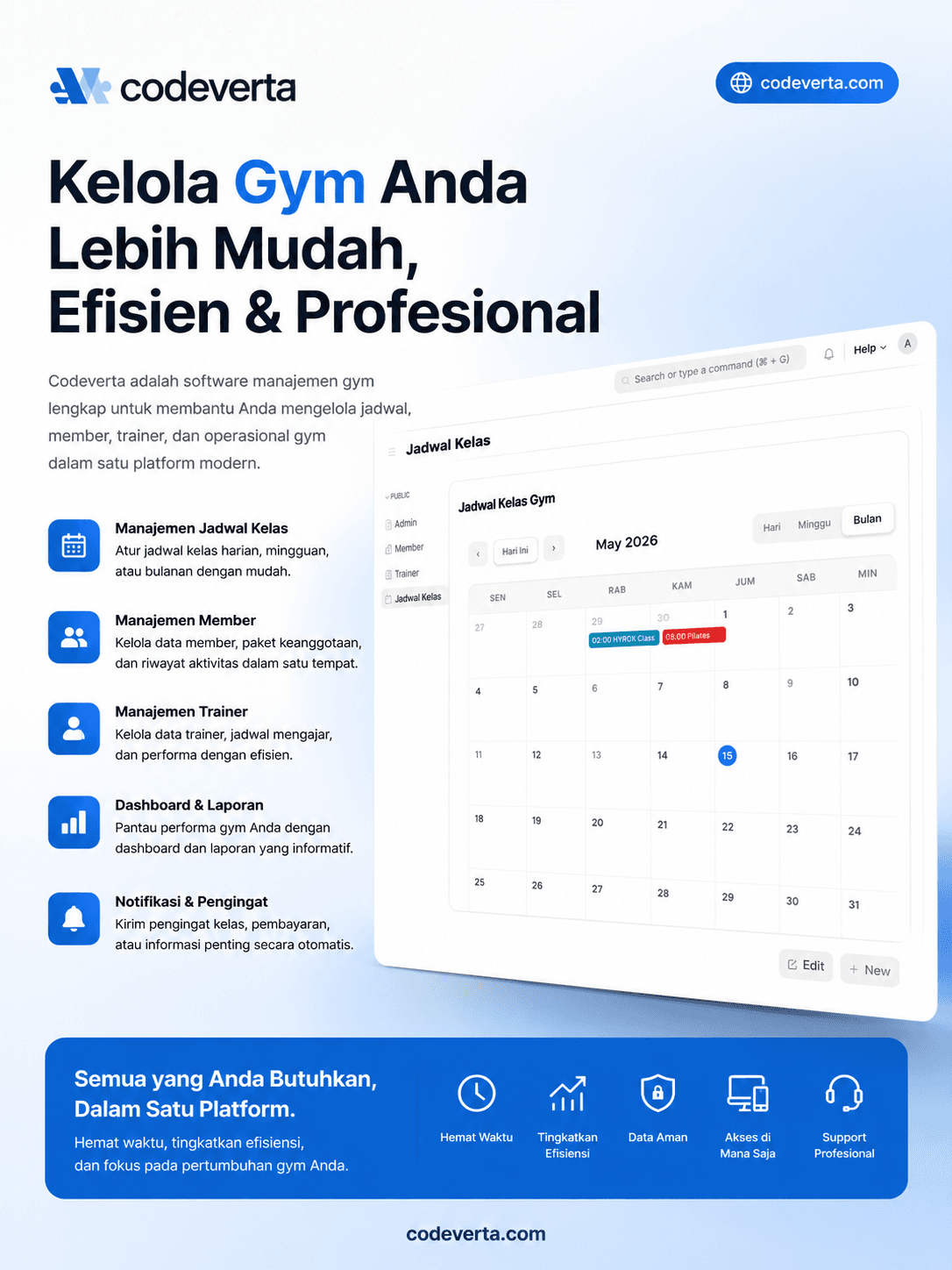
Votre salle de sport est en désordre parce que vous utilisez encore des registres manuels ? Il est temps d'utiliser un système de gestion
15 juillet 2026
retención gimnasio pour les entreprises modernes
10 juillet 2026
retención hotel pour les entreprises modernes
5 juillet 2026