
Struggling to manage trainer schedules, member tracking, and gym finances all jumbled together? See how a gym management information system can streamline operations without the headache.
Recommended Products
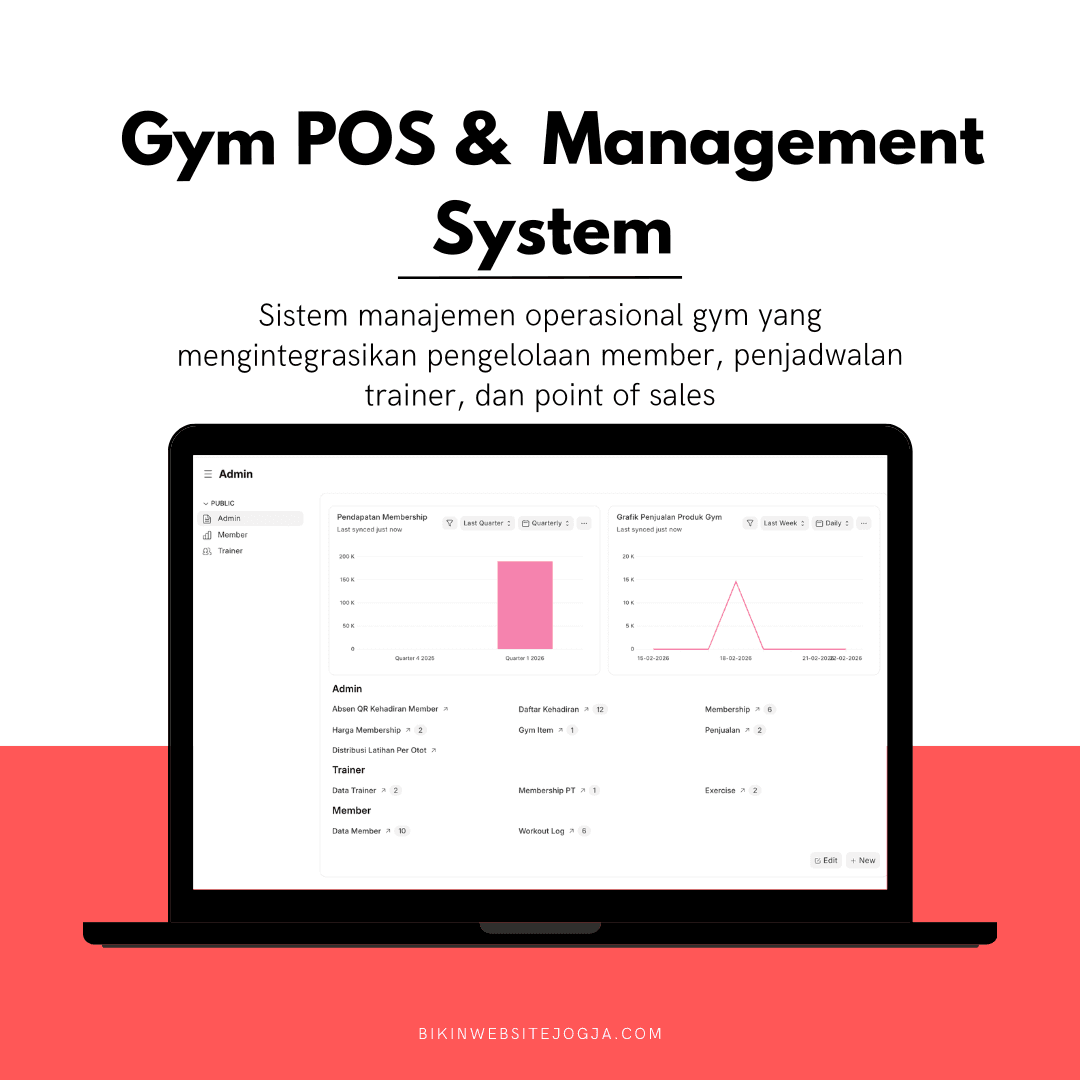

Gym Operations a Mess Because You're Still Using Manual Records? Time for a Gym Management System
"Member named Andi says he already paid, but there's no record in the book?"
Ever heard that line at your gym? Or maybe it happens more often than you'd like?
I talked to a gym owner in Depok a while back. He told me that every end of the month, his wife has to stay up 2-3 days just to reconcile member payments — who's paid in full, who's on an installment plan, who paid cash but forgot to write it down. Not to mention expense reports for equipment replacements, trainer salaries, electricity, water — all calculated manually in phone notes and notebooks.
It feels like being an accidental accountant, not a business owner.
This isn't an unusual story. Many gym UMKM owners in Indonesia still run their businesses the same way: bookkeeping in physical ledgers, member lists in WhatsApp notes, trainer schedules on sticky notes. And every month, something always goes wrong.
Why Manual Records Fall Apart Once Your Gym Gets Going
It's understandable when you're just starting out with 10-15 members — everything is manageable. You know names by heart. You remember all payments. But once members hit 50, 80, let alone 100 people, manual methods start to break down.
There are several common failure points:
Mixed-up member payments. Some pay monthly, some pay per session, some take a 3-month package. Some transfer money, some pay cash, some entrust payment to a friend. When everything is recorded in one book without a system, get ready for headaches at reconciliation time.
Attendance data that's never accurate. Try asking your front desk staff, "who came this week?" The most likely answer: "I think A and B came often, C hasn't been seen in a week." Pure guesswork. No concrete data.
Conflicting trainer schedules. Trainer A wants the afternoon shift, Trainer B wants the evening shift, but they both end up handling the same member at the same time. The result? Members show up but their trainer is busy with someone else.
Unclear financial reports. Where did the money come from? Member payments? Supplement sales? Locker rentals? Where did it go? Salaries, electricity, equipment service? Without proper records, at the end of the month you only know: "there's money, but I have no idea where it went."
This isn't about you being careless. It's about the limits of human data processing capacity. The more members and transactions you have, the less your brain can accurately store everything.
The Impact of a Disorganized Gym Management System
Losing Money Without Realizing It
There's a story about a gym owner in Bandung. For 8 months, he never really knew what his gym's net income was. When I helped audit the existing records, it turned out 25% of member payments weren't recorded in the book. The money went into his account, but he didn't know whose payment it was. So he assumed it was "bonus money" and spent it on other things.
That's not stupidity. That's a system problem. When payment records aren't integrated, you lose visibility. You don't know which money is already "earmarked" for operational costs and which can be spent.
Members Leave Because of Poor Service
Put yourself in a member's shoes: You sign up for a gym, pay monthly, but every time you come you have to queue for equipment because there's no booking system. Or you want to ask about your progress, but the trainer has no record of what you did last week. Or your membership expires, nobody tells you, and suddenly when you show up they say "sorry, it's expired."
Members who feel uncared for will leave. Simple as that. And finding new members is more expensive than keeping existing ones. But without a system, you can't give personal attention to every member consistently.
Business Decisions Become Guesswork
Want to add operating hours? Hire a new trainer? Buy new equipment? Without data, every decision is based on "feeling." But attendance data can tell you: which hours are busiest, which days are quietest, which equipment gets used most. Without that, you can make wrong investments — buying equipment nobody uses, or hiring a trainer for quiet hours.
What a Gym Management Information System Actually Is
Now let's get to the point. A gym management information system is simply software or an application that helps you manage all gym operations from one place. Not just recording payments, but also:
- Member management — personal data, membership type, payment history, active period
- Attendance tracking — who came at what time, how many times a week
- Trainer and class schedules — who teaches what and at what time
- Finance — income per member, operational expenses, profit and loss reports
- Reminders and notifications — automatic WhatsApp messages to members about to expire or who rarely come
- Reports — churn rate, active members, monthly revenue
Its function isn't to replace you as the owner, but to give you a clear "dashboard" of your gym's condition anytime.
The difference from manual records: data is entered once and automatically integrated. A member pays — it's automatically recorded in finances, their membership status updates, and if needed — a notification is automatically sent. No more manual re-summarizing, no more crossing things out.
Practical Implementation: How to Migrate from Manual to a System
If you've been using books and spreadsheets, migrating to a system does take some effort. But it doesn't have to be complicated. Here are the steps I recommend:
1. Audit Your Existing Data
Before switching systems, first document what data you currently have:
- List of active members (name, contact, membership type, registration date, expiration date)
- Payment history (who paid when, how much, method)
- List of trainers (name, working hours, specialization)
- Equipment inventory (what you have, condition)
- Financial data (initial capital, monthly costs, average income)
This is important because this data will be entered into the new system. If the old data is messy, the new system will also be messy. Garbage in, garbage out.
2. Choose a System That Fits Your Scale
Not all gym software is the same. Some are suitable for large gyms with hundreds of members, some are specifically designed for small gyms. A few things to consider:
- Ease of use. Don't choose software that requires days of training for your staff.
- Features that match your needs. Need class booking? Progress tracking? Financial reports? Find one with the right features — don't pay for features you won't use.
- Accessible from a phone. Many gym owners and staff work on the go. A system that can only be accessed from a computer will be impractical.
- Sustainable pricing. Don't take software with monthly costs higher than your gym's profit. Many local software options are affordable for UMKM businesses.
3. Input Data Gradually
You don't need to input all data in one day. Divide it into sessions:
- Days 1-2: Input active member data
- Day 3: Input trainer and schedule data
- Day 4: Input equipment inventory data
- Day 5: Input financial data and recent transactions
If there's old member data that's no longer active, skip it. Focus on active data first.
4. Run in Parallel First (7-14 Days)
This step is often skipped but it's important. Run the new system alongside the old method for 1-2 weeks. The goals:
- Ensure data in the new system is accurate
- Staff and trainers learn the system without pressure
- Find bugs or issues before fully switching
Once you're confident everything works, then leave the manual records behind.
Example Daily Workflow with a Gym Management System
To make it clearer, here's an example of how daily gym operations run with a system:
Morning, 6:00 AM: Gym opens. Staff checks the system dashboard — sees the morning class schedule: Yoga at 7:00 AM with 12 registered participants. Also checks the list of members whose memberships will expire in 3 days — the system automatically sent WhatsApp reminders last night.
9:00 AM: A new member signs up. Staff enters data via phone: name, phone number, selects a 1-month package, pays via QRIS. The system automatically generates a member ID and sends a welcome WhatsApp to the member with check-in instructions and class schedule.
Noon, 12:00 PM: Check attendance reports. The system shows Budi hasn't been in for 10 days. Staff sends an automatic reminder via the system's feature: "Hi Budi, we noticed you haven't been to the gym in 10 days. Any issues? Come in for a free consultation with our trainer."
Afternoon, 4:00 PM: Check the evening trainer schedule. The system displays Trainer A and B's schedules, plus which members have booked personal training sessions today. No conflicts because the system automatically checks availability.
Evening, 9:00 PM: Gym closes. Owner opens their phone, sees today's summary: 45 members came, 3 new members signed up, today's revenue Rp 2.3 million. All from one dashboard. No need to wait for staff to compile reports.
This isn't a made-up ideal scenario. This is a workflow already running at several small gyms I know.
Features Most Commonly Used in the Field
From friends who've already migrated to a system, these are the features they use most:
Digital check-in. Replace the guest book with QR code scanning or a PIN. One scan, and attendance data is automatically recorded. This gives accurate data about peak hours and busy days. Can be used to evaluate when extra staff is needed or when to open new classes.
Automatic reminders. The staff's favorite feature. No more individually messaging 50+ members to remind them about payments or check in on them. The system sends messages automatically based on triggers: "7 days no-show", "3 days before expiry", "happy birthday".
One-click reports. Want to see this month's income? Which trainer has the most sessions? Which member comes most frequently? Everything is accessible in seconds. No more manual compilation from various sources.
How Much Does Gym Software Realistically Cost?
This question always comes up. The answer depends on needs and scale.
For small gyms with 50-150 active members, local gym management software typically ranges from Rp 100,000 to Rp 500,000 per month. Some offer a one-time payment system with your own domain and hosting.
Compare that with monthly gym operational costs: electricity can be Rp 500,000 - 1.5 million, trainer salaries 3-5 million per person, rent 5-15 million. Software costs in that range are actually small — maybe even less than replacing one lost dumbbell.
But more importantly: software isn't an expense, it's an investment. When the system helps reduce churn from 60% to 30%, that means you're retaining more members without spending on marketing. When financial reports are automatically accurate, you have data to make business decisions. When staff don't waste time on manual data entry, they can focus on serving members.
I did the math once: for a gym with 100 members averaging Rp 200,000/month, retaining 10% more members each month means an additional Rp 2 million in monthly revenue — enough to pay for a year's worth of software plus profit.
Checklist: Does Your Gym Need a Management System?
Answer these questions honestly:
- Does it take more than 2 hours at the end of each month to reconcile member payments?
- Do you ever have to say "sorry, I need to check the book first" when a member asks about their status?
- Do you not know your gym's exact churn rate this month?
- Do trainer schedules often conflict or is it unclear who handles whom?
- Do members ever complain "why am I being charged when I already paid?" or "my membership is still active, why was I told it expired?"
- Is your monthly income just a rough estimate, not an exact figure?
- Do staff often work overtime to manually compile data?
If you answered "yes" to 3 or more, your gym likely needs a management system. Not because manual is wrong — but because your business growth has exceeded what manual methods can handle.
Tips for Choosing the Right Gym Management Software
Many people ask, "should I buy ready-made software or build my own?"
For UMKM businesses, my advice: don't build your own. Building software from scratch is expensive — can run into tens or hundreds of millions of rupiah — and takes months. Ready-made software has usually gone through trial and error, with features already adapted to real-world needs.
What matters when choosing software:
-
Look for a free trial. Don't pay annually right away. Try it for 7-14 days first, see if it fits your gym's workflow.
-
Make sure support is responsive. Because there will be times you need help — whether you forget how to input data, or there's an error. Check other users' testimonials about support quality.
-
Ask about the feature roadmap. Ask the software provider: what features will be added in the next 6-12 months? This shows whether they're serious about product development or just making sales.
-
Don't focus too much on low price. Cheap software usually has limited features, slow support, or doesn't get updated. Better to pay a bit more for stable, well-maintained software.
-
Check compatibility. Can the system run on a phone? Can data be exported if you ever want to switch? This is important for future-proofing.
Closing: It's Not Just About Changing Tools, But Changing How You Work
Having gym management software doesn't mean problems solve themselves automatically. Just like having a fancy treadmill doesn't automatically turn a member into an athlete. What changes is how you manage data, how your staff works, and how you make decisions.
The most important thing: the system is a tool. The end goal remains the same — satisfied members, smooth operations, and a sustainable business.
If your gym is still using manual records and you're starting to feel overwhelmed at the end of each month, you're not alone. Many small gym owners feel the same way. The difference is, some have started switching to a system and can now focus more on serving members rather than managing notebooks.
Start by auditing your existing data, determine your needs, find a system that fits, and implement it step by step. No need to rush. The important thing is to start.
🚀 Butuh Sistem Serupa?
Kami dari Codeverta bisa bantu bangunkan sistem Gym Management System yang sesuai dengan kebutuhan bisnis Anda.
Tim teknis kami siap mendiskusikan kebutuhan Anda tanpa biaya.
More Articles
7 Gym Management System Features That Help RoxGym Operate More Efficiently
May 23, 2026
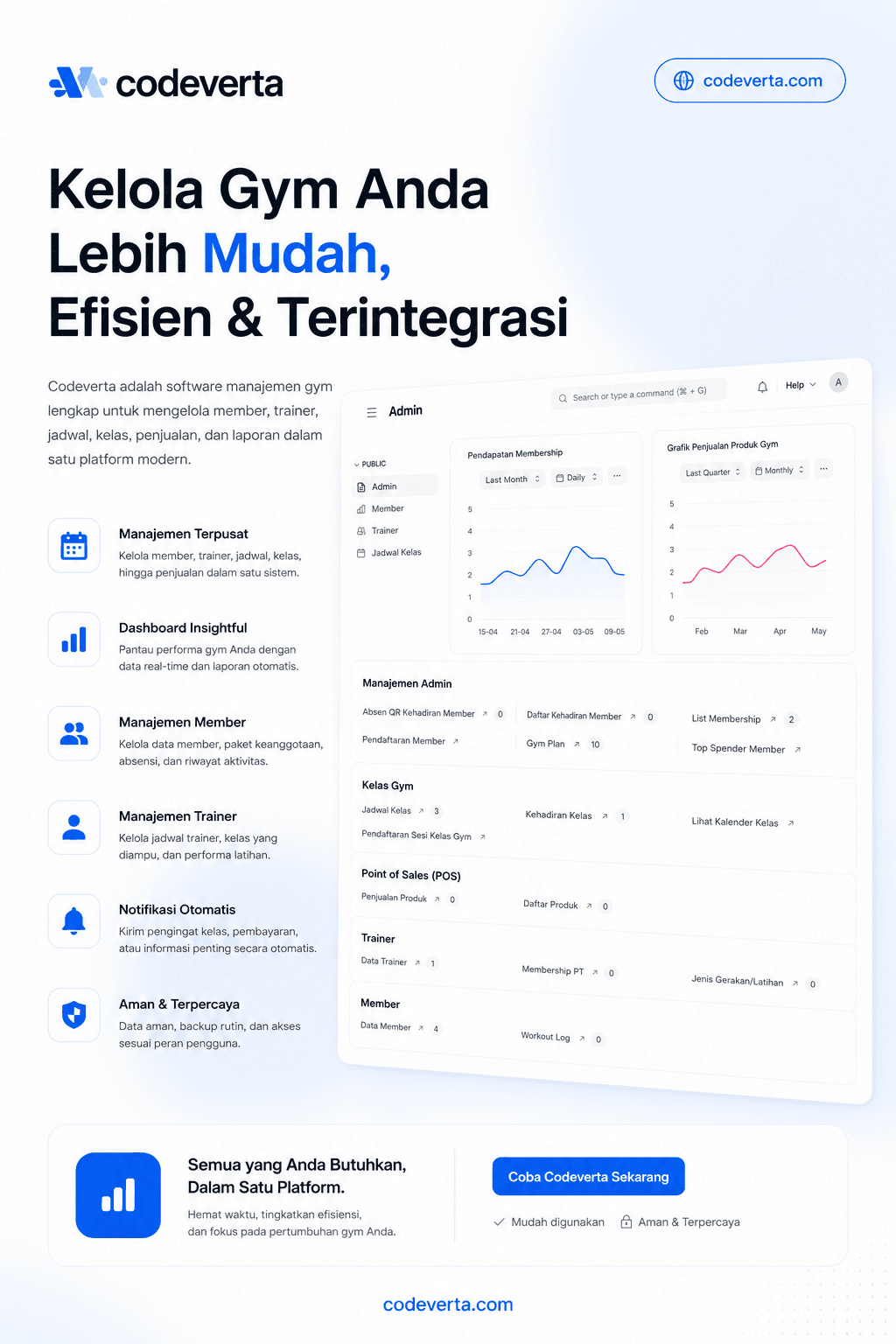
Cara RoxGym Mengelola Member, Trainer, dan Penjualan dalam Satu Dashboard
May 24, 2026
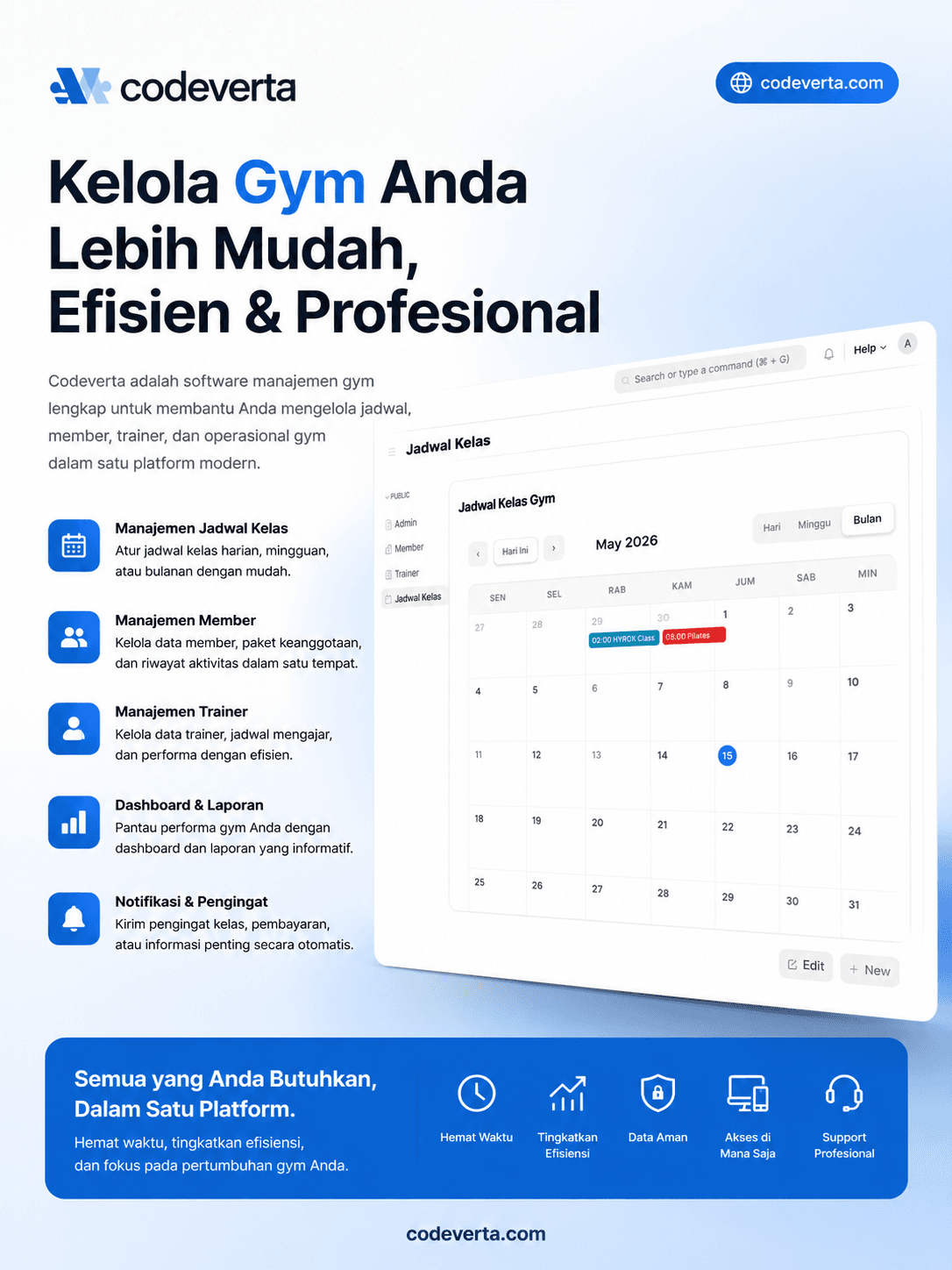
Gym Management System for Small Studios in Indonesia: Fix Member Chaos and Daily Operations
May 15, 2026
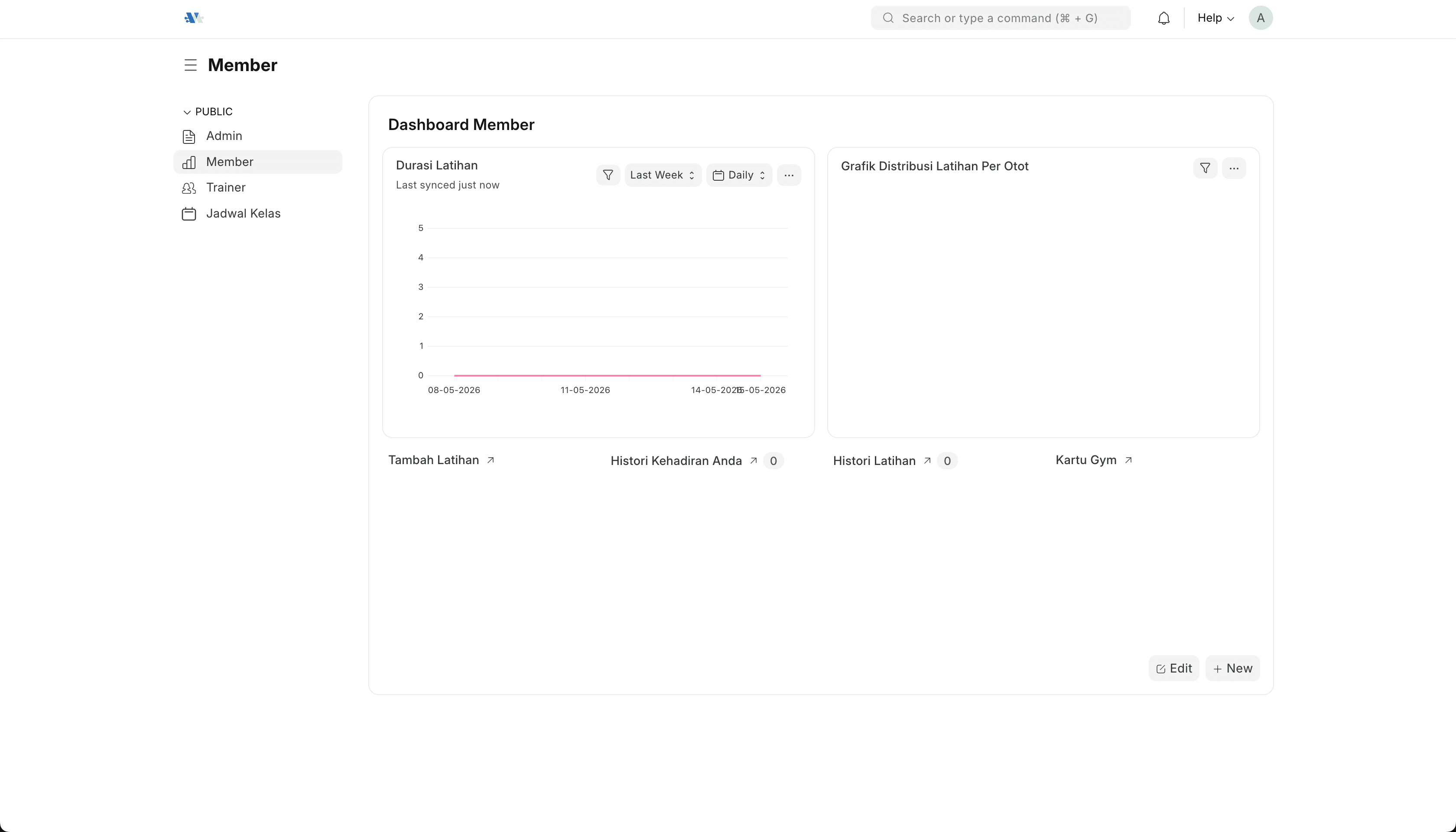
Why Small Gyms Struggle to Retain Members and How to Fix It
July 10, 2026