

WhatsApp and spreadsheets work fine when you're starting out. But there's a specific point where they stop working — and most business owners only notice it after the damage is done.
Recommended Products



Why Most Small Businesses Outgrow WhatsApp and Spreadsheets Faster Than They Expect
Most businesses don't start with a system problem. They start with a hustle problem — and WhatsApp, a shared spreadsheet, and a good memory are enough to get through the first chaotic months.
It works. Orders come in through chat, someone writes it in the sheet, work gets done, money comes in. Simple, fast, zero cost.
Then something shifts. The team gets bigger. Orders pick up. A second location opens, or a second service line. And the cracks that were always there start showing up in ways that cost real money.
This isn't a technology story. It's a growth story that plays out almost identically across laundries, gyms, hotels, catering operations, and contractor businesses. The tools that worked at month three become the source of friction at month eighteen.
What "Working Fine" Actually Looks Like
Before diagnosing the problem, it's worth being honest about why these tools feel adequate for so long.
WhatsApp is fast. Everyone already has it. Customers are comfortable using it. Photos, voice notes, and quick confirmations happen in seconds. For a laundry taking ten orders a day, that's a perfectly functional intake process.
Spreadsheets are flexible. You can build exactly the columns you need, share it with the team, and update it from anywhere. For a gym tracking fifty members, a well-structured sheet covers billing, attendance, and membership status without much trouble.
The failure mode isn't that these tools are bad. It's that they don't scale — and the point where they stop working is usually invisible until you're already past it.
The Four Breaking Points
1. When Two People Edit the Same Record at the Same Time
A shared Google Sheet for order tracking works fine when one person updates it. When two staff members are both entering orders during a busy morning, you get conflicts, overwrites, and missing entries. Someone took an order but the sheet wasn't updated. Someone marked a job complete but the original entry had already been modified.
The sheet becomes unreliable — and once the team stops trusting it, they stop updating it, which makes it even less reliable.
2. When Customer History Disappears Into Chat
A returning customer asks: "Can I get the same order as last time?" Your staff scrolls through 400 WhatsApp messages trying to find it. Or a customer disputes a charge and asks for their payment history — and the record is a combination of chat messages, a line in a spreadsheet, and something written on a sticky note.
Customer data that lives in chat threads has no structure, no searchability, and no permanence. The moment a staff member leaves and takes their phone with them, that history is effectively gone.
3. When You Can't Tell What's Actually Happening Right Now
A spreadsheet shows what was entered. It doesn't show what's in progress, what's overdue, what's been picked up, or what's waiting for a customer callback.
At ten orders a day, your memory fills the gap. At fifty orders a day across two shifts, nobody has a complete picture — and the gaps show up as missed pickups, duplicate orders, and customers who fall through entirely.
4. When Reporting Requires a Half-Day of Manual Work
"How much did we make last week?" In a spreadsheet operation, someone has to add up a column, cross-reference with payments received, exclude the ones still outstanding, and produce a number — manually, every time.
That's not a reporting problem. That's a signal that your data isn't structured in a way that lets it answer questions.
The Real Cost Isn't the Time — It's the Errors
Most business owners notice the inefficiency of manual systems (it takes too long to look things up, it takes too long to update the sheet) but underestimate the error cost.
Errors in manual systems are typically:
- Silent — nobody knows an order was missed until the customer calls
- Compounding — a wrong entry propagates into reports, billing, and follow-up
- Hard to trace — when something goes wrong, you can't reconstruct exactly what happened
A catering business that loses one corporate client due to a missed order confirmation has probably lost $3,000–$10,000 in annual revenue from that relationship alone. That single error, caused by a WhatsApp message that got buried, cost more than a year's software subscription would have.
What Enterprise Companies Learned (and Applied)
Telstra manages millions of customer interactions, thousands of technician jobs, and a national infrastructure — and none of it runs on chat threads or spreadsheets. Not because they're a big company, but because they learned early that informal systems fail at scale.
What replaced those informal systems isn't complexity — it's structure. Every customer interaction creates a record. Every job has a status. Every status change is logged. Every staff member can see the current state of their queue without asking anyone.
Atlassian — an Australian software company whose tools are used by teams across the world — built their entire product philosophy around this principle: information should be in a system, not in someone's head or inbox.
For a small business, the equivalent isn't enterprise software. It's purpose-built operational software designed for your business type — something that handles intake, tracking, payments, and reporting in one place, built around how your specific operation actually works.
A Realistic Migration Story
A gym owner in their second year was running everything through a combination of WhatsApp groups (class bookings and cancellations), a spreadsheet (membership tracking and payments), and verbal communication between trainers.
The spreadsheet had grown to 340 rows. Payments were manually highlighted when received. Cancellations sometimes got updated, sometimes didn't. When a member asked about their remaining class credits, the answer took five minutes and was sometimes wrong.
The breaking point came when two members were charged twice in the same month — one because the payment column was accidentally overwritten, one because a manual bank transfer wasn't flagged as received. Both members noticed. Both complained. One left.
After moving to gym management software: membership records, payment history, class bookings, and attendance logs all in one system. Payments synced automatically. Cancellations updated in real time. Staff knew who was booked into each class before it started.
The time saved on admin was meaningful. But the real gain was that errors stopped compounding silently — because there was a system that could catch them.
How to Know If You're at the Breaking Point
Answer honestly:
- Do you ever lose track of where an order or job is in its lifecycle?
- Has a customer ever told you something wasn't done that your records say was?
- Do you dread pulling reports because of how long it takes?
- Is your customer history stored in a way that a new staff member couldn't access it without your help?
- Have you ever had two staff members give a customer conflicting information about their account?
If any of these are yes — and especially if more than one is — your systems are already limiting your operation. You're not at risk of having a problem. You already have one.
The Right Time to Switch
There's a myth that you should wait until you're "big enough" to need proper software. In practice, the businesses that switch earliest tend to grow the fastest — because they stop spending energy managing system failures and redirect it toward customers and quality.
The right time to switch isn't when you're overwhelmed. It's just before the point where informal systems start costing you — in errors, in customer experience, in staff frustration.
If you're reading this and recognizing your own operation in any of the above, that point is probably closer than you think.
More Articles

Gym Berantakan Gara-Gara Catatan Masih Manual? Saatnya Pakai Sistem Manajemen Gym
15 जुलाई 2026
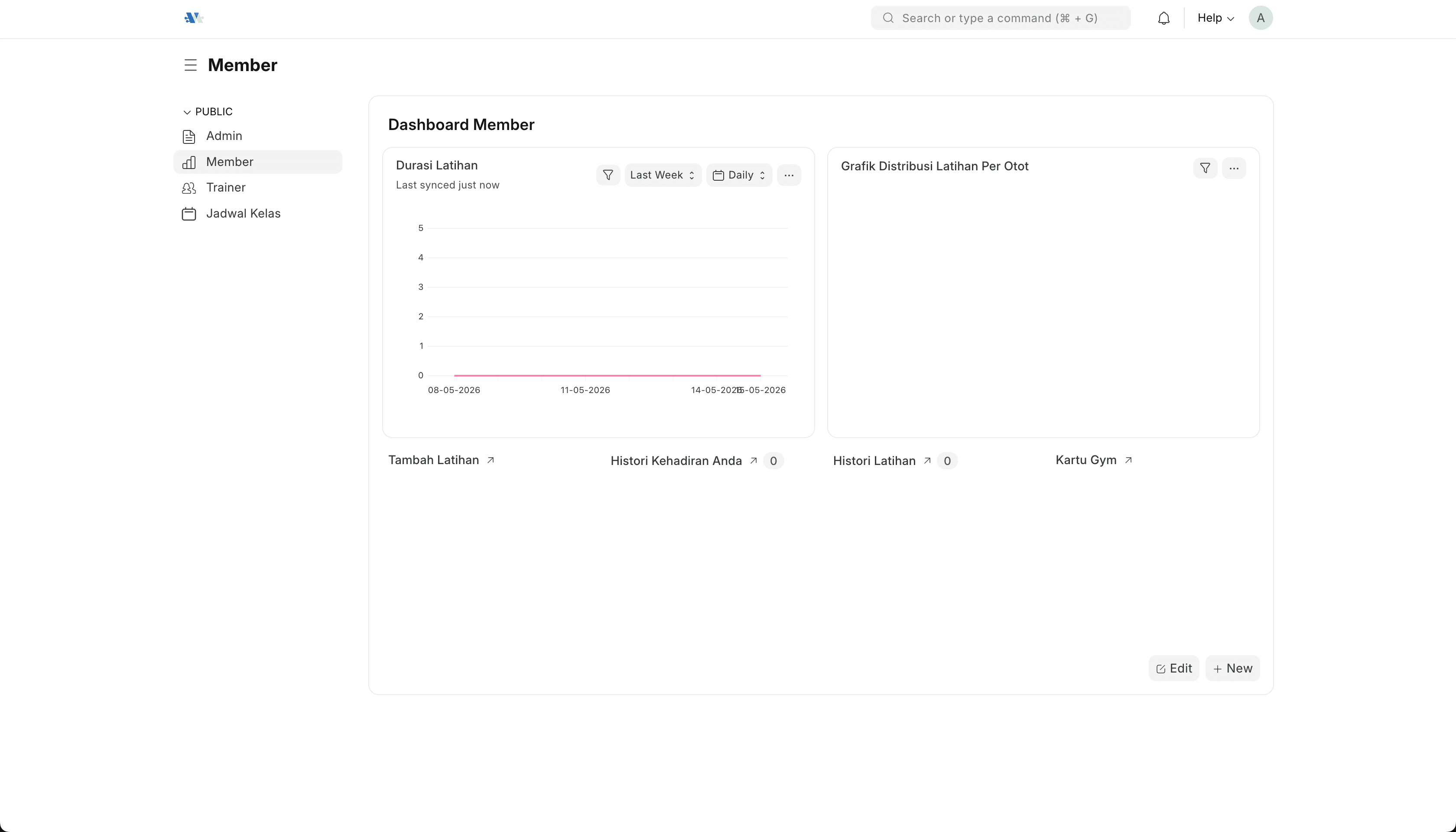
Kenapa Gym Kecil Susah Pertahankan Member dan Cara Mengatasinya
10 जुलाई 2026

Kenapa Hotel Kecil dan Penginapan Sering Kehilangan Tamu Setia?
5 जुलाई 2026
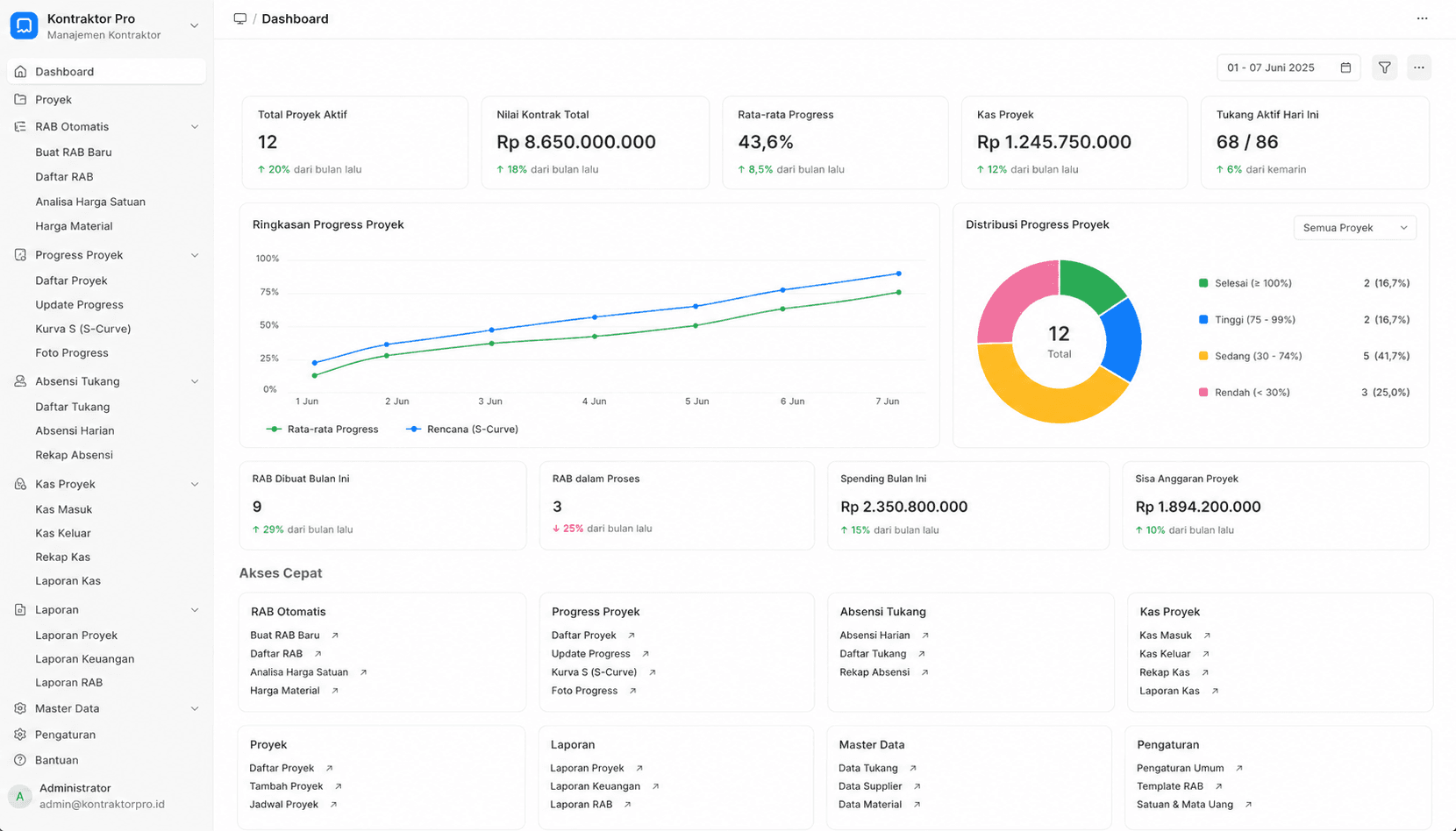
Mengapa Proyek Kontraktor Sering Molor dan Cara Mengatur Material Tanpa Ribet
25 जून 2026